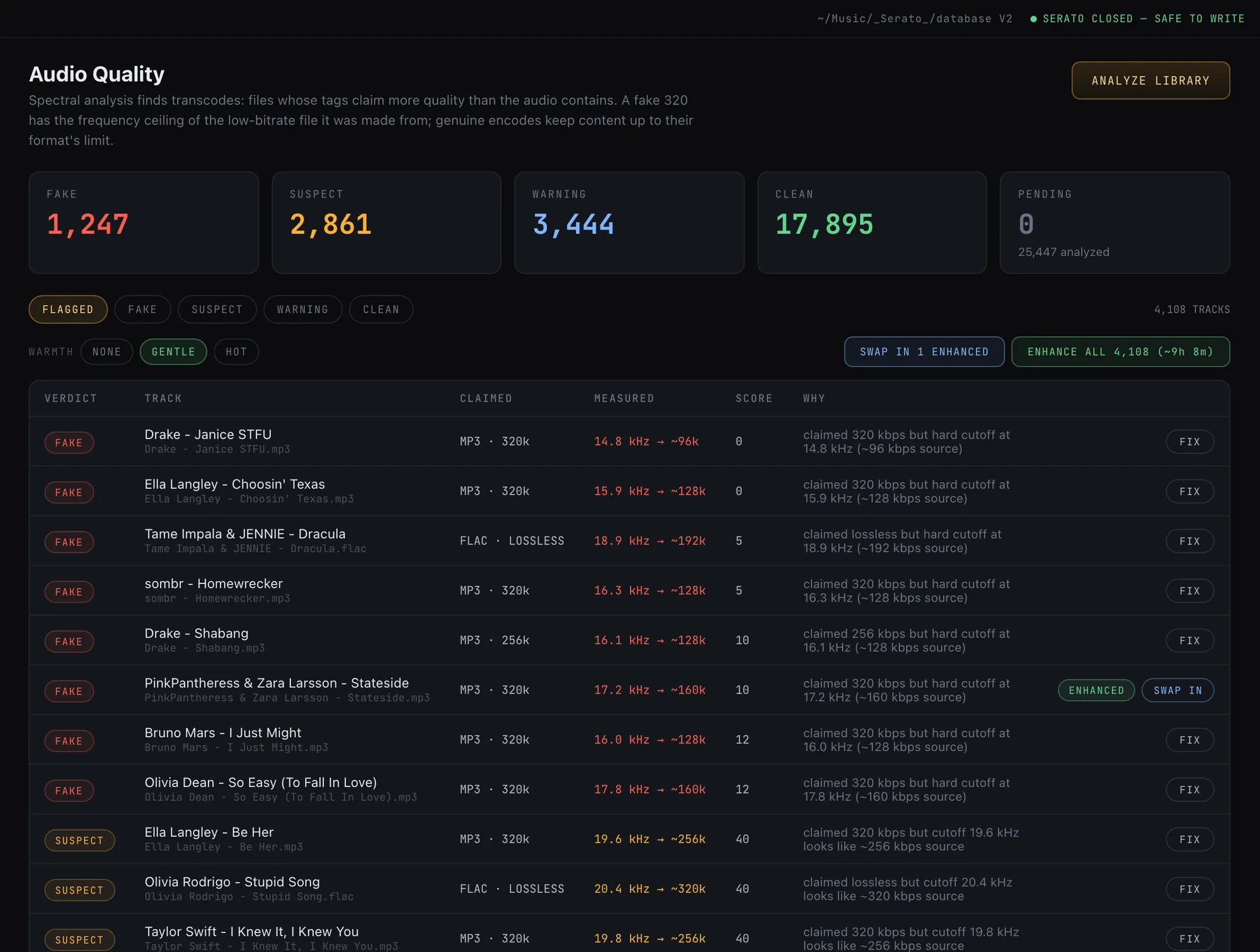
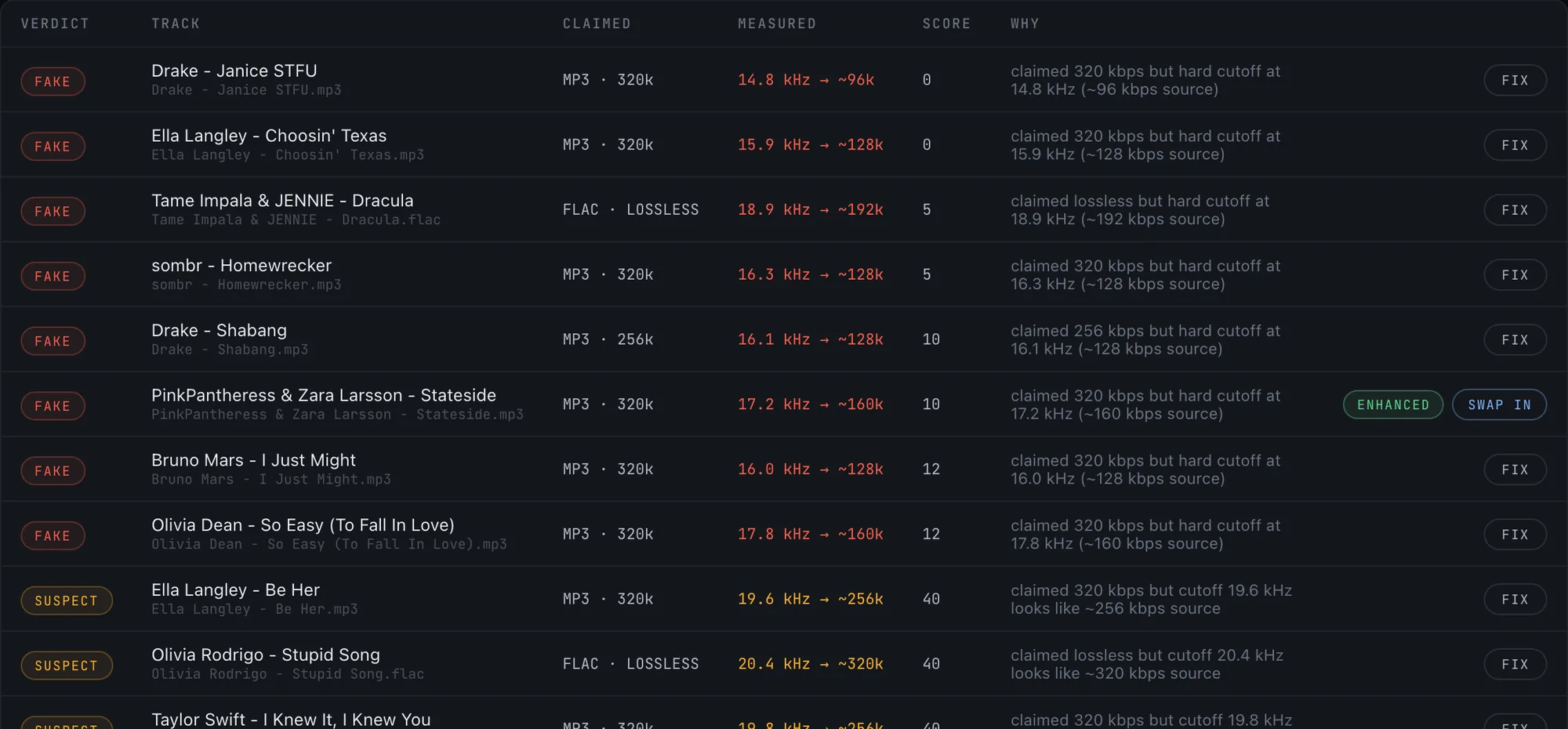
What is a fake 320?
An MP3 tagged as 320 kbps that was actually encoded from a lower-bitrate source, such as a 128. The tag says 320 but the audio has the frequency ceiling of the smaller file, so you are carrying low quality under a high-quality label.
Will it wrongly flag my dark or vinyl-sourced tracks?
It is built not to. Gradual high-frequency roll-offs, which is what dark masters and vinyl rips look like, are capped at a warning rather than called fake. Files with a genuinely low sample rate are never called fake for frequencies they cannot contain.
Does analyzing my library change any files?
No. Quality detection is entirely read-only. It reads audio to measure the spectrum and writes only a verdict into Crate Cleaner's own database, never to your files or to Serato.
How accurate is it?
It uses the same spectral brickwall method as established transcode detectors, sampling multiple windows per track and biasing toward protecting authentic files, so false fakes are rare.
What do I do with the tracks it finds?
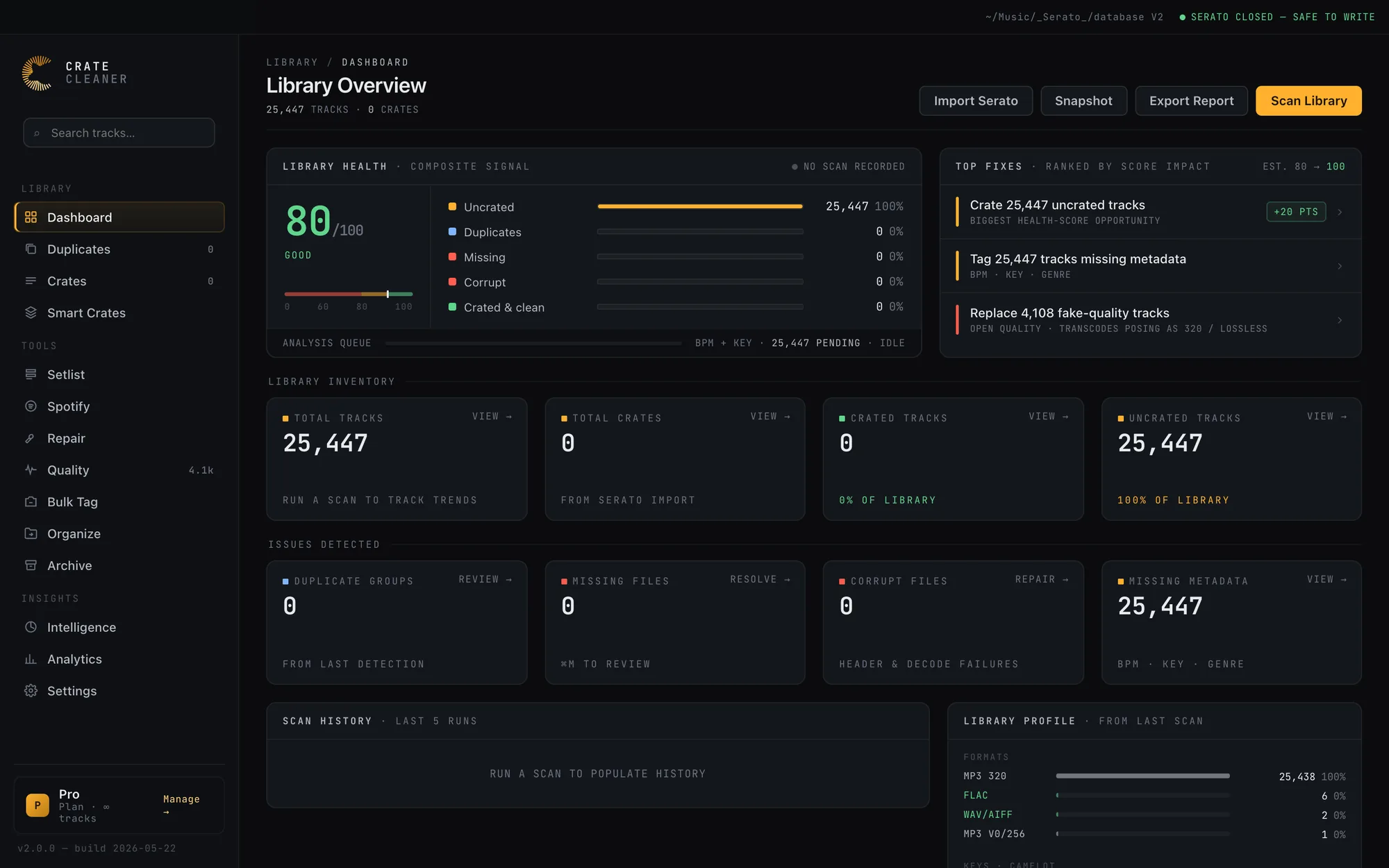
Replace them with a real copy, or repair the fixable ones in place with Audio Repair. The dashboard ranks the whole batch by impact so you can start where it matters most.
Which plan includes transcode scanning?
Every plan, including free, and there is no track limit. Scanning is read-only analysis that runs on your own machine, so you can see exactly how many fake files are in your library before paying anything. Repairing them is the part that is metered: free repairs 100 tracks a month, Pro and Studio are unlimited.